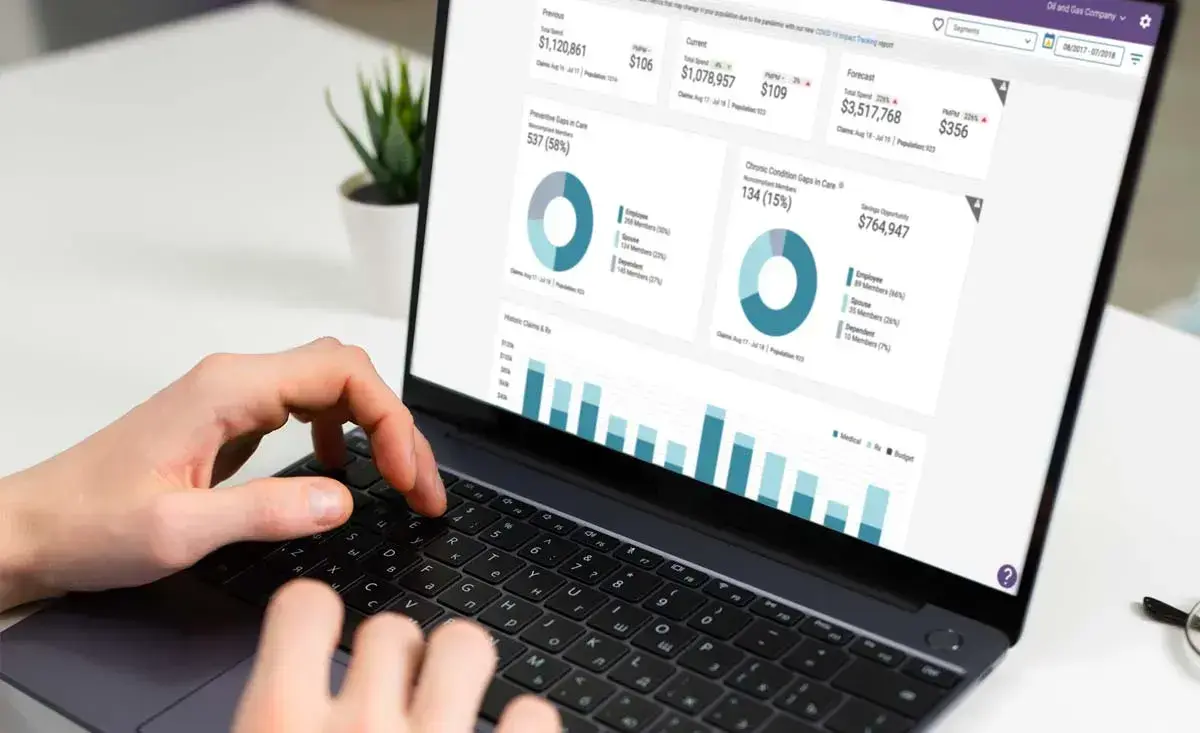
As someone with a distaste for the concept and practice of mathematics might tell you, data is nothing more than numbers until you put those numbers into action. The context, relationships, and interactions between static numbers are what makes up basic analytics, and the same idea extends to analyzing data in the healthcare space.
The methods of risk indexing and benchmarking are two operations that completely define the idea of healthcare analytics and allow employers, brokers, and carriers to make informed predictions about health outcomes. However, due to their overall complexity and their reliance on other pieces of technology in a larger healthcare tech stack, they aren’t always given credit for their contributions. Let’s take an in-depth look at these two analytical functions and how they contribute to the overall methodology of healthcare data analysis.
Risk Indexing
Risk indexing is the first statistical method that should be applied to a set of healthcare data if it is to eventually be used for overall member health improvements. In a nutshell, this is a process that looks at large sets of data and tries to understand patterns of what will happen to people based on certain flags or indicators. These indexes create a standardized metric usually called a “risk score” or “risk stratification” that explains the likelihood that an individual will experience a particular outcome. This data application is critical for anyone trying to predict what will happen with members and cost in the future.
However, there is no one-size-fits-all risk index. Each index bases its calculations on different criteria which can lead to subtle, and not-so-subtle, differences in data analytics. Some indexes only pull clinical data, while some access pharmacy and lab data. Other indexes search for specific health issues, others give a general risk score. It’s important that employers and benefits professionals understand what they need their data to do before choosing which risk index is necessary. There are many risk indexes out there, but the following are some of the larger methods that are regularly applied to member health data:
- Hierarchical Condition Categories (HCCs)
- Adjusted Clinical Groups (ACG)
- Elder Risk Assessment (ERA)
- Chronic Comorbidity Count (CCC)
- Minnesota Tiering (MN)
- Charlson Comorbidity Measure
Benchmarking
Benchmarking adds another layer of statistical significance to the data. In a quick word, the process refers to “the act of identifying and measuring data against previously existing practices” to give a sense for where the data currently is and where it will be going.
Around the world, different organizations have taken up the mantle of creating and maintaining standardized benchmarking sets to help smooth out the changes in data analyzation across the industry. In the U.S., that organization is the Agency for Healthcare Research and Quality (AHRQ). They partner with hospital organizations states across the country to aggregate and analyze data for multiple categories, building datasets for different health-related activities in the effort to set the benchmark for what an industry standard is. The AHRQ Quality Indicators that data should be benchmarked against are:
- Prevention Quality Indicators
- Inpatient Quality Indicators
- Patient Safety Indicators
- Pediatric Quality Indicators
In addition to these medical benchmarks, a whole industry of peer-benchmarking has grown up to help employers take a more localized approach to data analytics. With the right analytics vendor, it’s possible to benchmark data against other similar companies and group by geography, company size, age demographic, and other metrics.
By putting raw health data through the process of indexing and benchmarking, we’re adding the context and relationship that allows organizations to really use their data toward better health outcomes. Without comparing datasets like this, our view of human health as a whole would be much smaller, lessening our ability to make future decisions based on the track record of information that has come before us. That future decision making is what’s so important to employers and organizations these days. Being able to make changes in health coverage that benefit the employer and employees is possible thanks to proper risk indexing and data benchmarking.